
The Silent Voices 1
Jul 23, 2025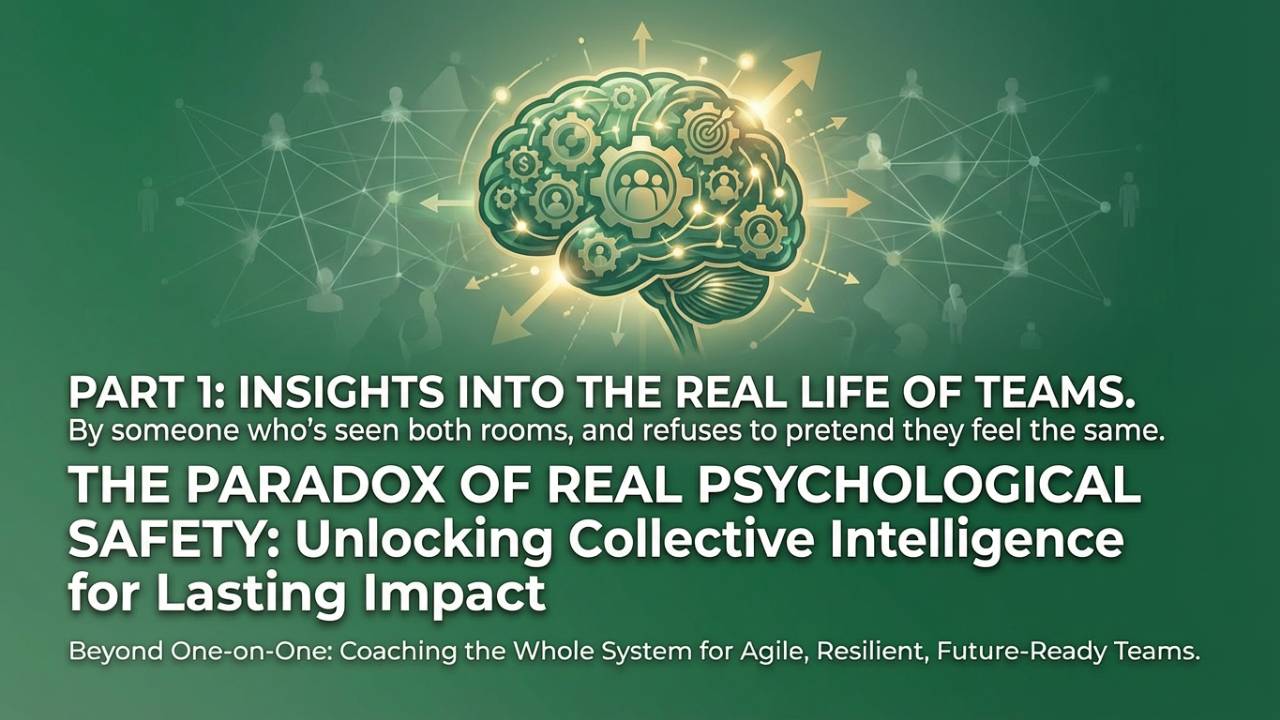
Part 1: Insights into the Real Life of Teams
By someone who's seen both rooms, and refuses to pretend they feel the same.
You won’t find them on LinkedIn.
No bold posts, no flashy headlines, no group selfies captioned “Best. Team. Ever.”
But they exist.
Small, quiet spaces where something remarkable happens, where people show up whole.
Just people. Present. Real. Human.
Their meetings - something feels different. The air feels soft, not heavy.
People speak… and they’re heard, not managed.
People disagree… and they’re thanked, not corrected.
This experience is rare, but it’s real: In a psychologically mature teams.
The Paradox of Real Psychological Safety
This isn’t the kind of “safety” where nothing gets challenged and everyone nods in agreement. This is the kind of safety coming from something deeper: mutual respect, emotional literacy, and developmental maturity.
Here’s the paradox: You feel safe enough… to feel unsafe. You bring your doubts. Your discomforts. Your wildly unpopular perspective. Not because you know it’ll be accepted, but because you trust it will be held.
These teams are led by individuals who’ve outgrown the need to control everything. Leaders who don’t need to be right to feel secure. They know that doubts aren’t a sign of weakness, and that tension isn’t a failure. They’ve done their work.
And so meetings start with questions that sound simple but real:
“What are we sensing in the room / in this situation?”
“What’s not being said yet?”
“Whose voice hasn’t been heard?”
People speak. Not to perform, but to contribute. You can feel the presence. The depth. The genuine curiosity.
And yes, people disagree. Boldly. But no one reaches for dominance. Because disagreement here isn’t dangerous. It’s generative.
There’s No Spotlight Here. Just Light.
You won’t find these spaces trending. They don’t get shout-outs in LinkedIn highlight reels. They don't need to.
They're quiet. Humble. Intimate. But once you’ve sat in one, you never forget.
These are teams led by post-conventional leaders. People who’ve expanded their own ego boundaries to include others. Who know that a team is more than the sum of its outputs, it’s the quality of energy between people.
And when that energy is clean, mutual, and alive?
The work becomes different.
The people become different.
The leadership becomes undeniable.
Too good to be true? Only if your standard is mediocrity.
Too rare to matter? Only if you confuse silence with alignment.
The Other Room
Now, let me show you something else.
A different kind of room. One you’ve probably been in.
The leader starts the meeting with: “I want your input.” And everyone knows, it’s not true.
They want confirmation, not confrontation. They want innovation, as long as it doesn’t challenge them.
They say “think outside the box”, but don’t realize their EGO IS THE BOX.
So the room shrinks. And the people in it do too.
You watch talented humans turn cautious. You feel the shift, the tension that nobody names but everyone feels. Ideas are filtered. Insights are softened. Truths are edited for “tone.”
And worst of all?
You start censoring yourself before anyone else does. You become the silent voice.
Which Room Are You In?
Both worlds exist. And they’re not defined by job titles or organisational charts. They’re defined by developmental depth, by the maturity of the people in the room.
Leadership isn’t a personality. It’s a process. And silence in teams isn’t random. It’s designed, intentionally or unconsciously, by the level of consciousness in the system.
So ask yourself, not as a manager or CEO, but as a human being:
- What kind of space do I create with my presence?
- What happens to truth when I enter the room?
- And who stays silent because I haven’t yet grown big enough to hear them?
Because how we lead determines who we silence.
And who we silence? That determines everything else.
Marjana Laibacher Rogelj, Your Developmental Companion
Leadership Maturity Coach, Systemic Team Practitioner
What if silence in your team isn’t a personality issue… but a developmental one?
In Part 2 of The Silent Voices, we move from lived experience to deeper understanding.
We’ll unpack the invisible architecture that shapes how people speak, or go silent, in teams.
You’ll learn:
🔹 Why some leaders create space while others unconsciously shrink it
🔹 How different developmental stages of leadership impact psychological safety
🔹 Why good intentions are not enough without inner maturity
🔹 And how to grow the kind of leadership that doesn’t just invite voices—but transforms them
We’ll go beyond “skills” and into vertical development, exploring frameworks like Cook-Greuter, Torbert, and Kegan that reveal how leaders make meaning—and how that meaning either frees or freezes the collective voice.
Because this isn’t just about better meetings. It’s about building teams where silence no longer feels like the only safe option.
🧠 Ready to see the system behind the silence? → Watch for Part 2: Unlocking Unexpressed Potential in Authority-Driven Systems